Ellis Wolf · 7 November 2026
Regulatory Adjustments Prompt Technology Firms to Revise Expansion Strategies Worldwide
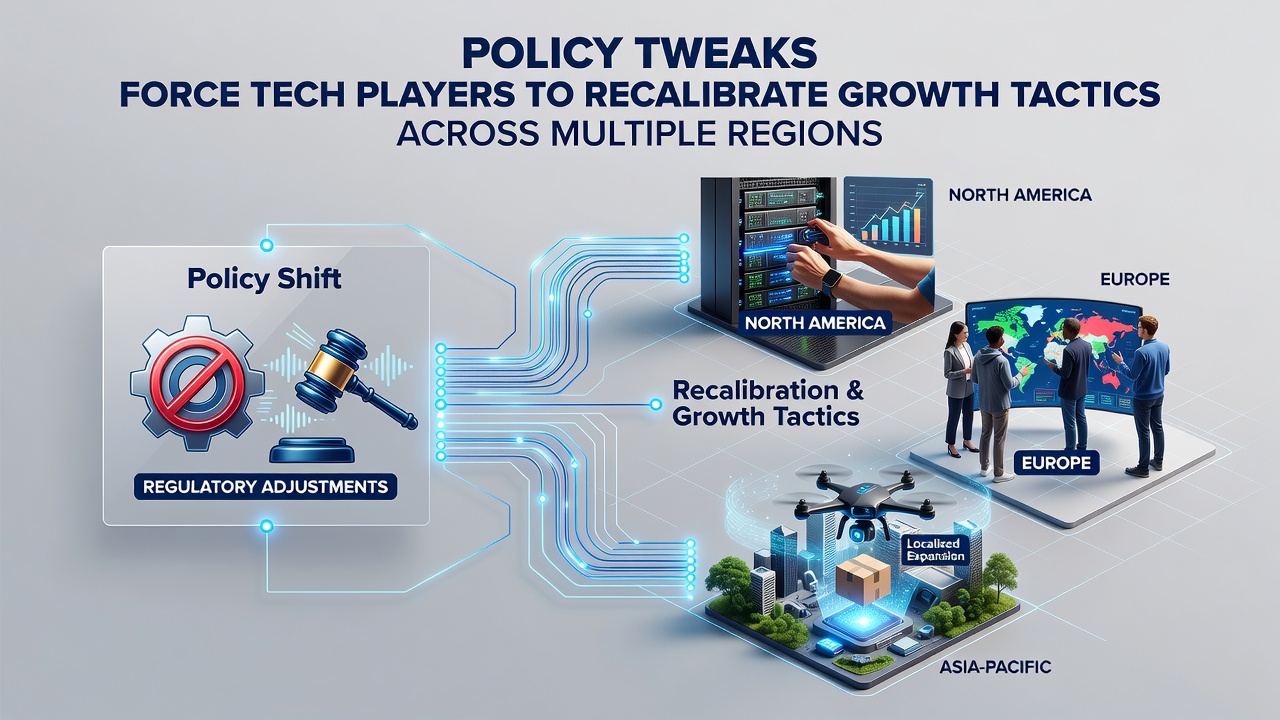
Policy adjustments in data handling, artificial intelligence oversight, and cross-border trade have led technology companies to modify their growth approaches in several key markets, and observers note that these changes stem from evolving frameworks in the European Union, North America, and parts of Asia. Companies such as major cloud providers and social platforms now face requirements that alter how they scale operations, localize data, and launch new features, while figures from regulatory filings show increased compliance spending across the sector since 2024.
European Framework Updates Drive Data Localization Shifts
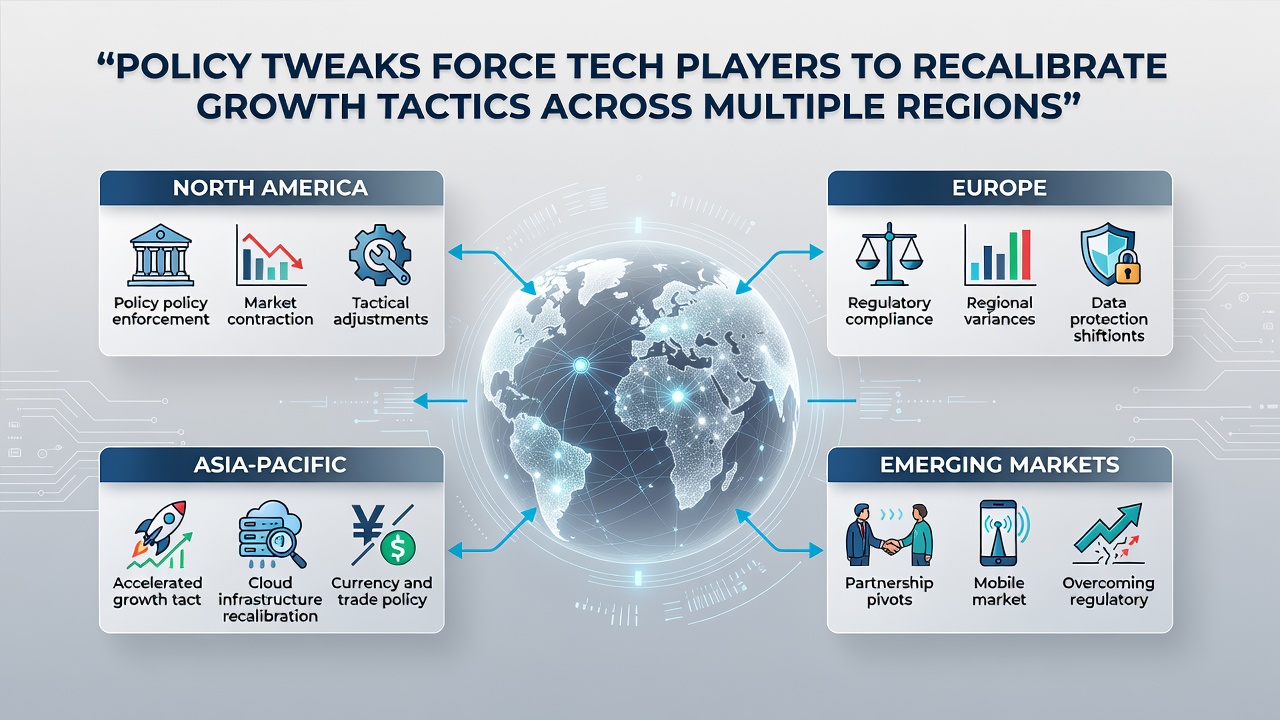
Updates to the European Union's digital services regulations have required firms to store certain user information within member state borders, and this has prompted several providers to expand server infrastructure in Germany and Ireland rather than relying on centralized facilities elsewhere. According to data from the European Commission, enforcement actions related to these rules rose by 25 percent in the first half of 2025, leading organizations to recalibrate timelines for product rollouts in the region. Researchers at academic institutions tracking these developments found that firms adjusted partnership models with local data centers to meet the new standards without disrupting service delivery.
Similar patterns appear in Canada, where federal privacy legislation amendments have introduced stricter consent protocols for cross-border transfers, and companies have responded by creating dedicated compliance teams focused on North American operations. Trade groups in the sector report that these measures affect advertising platforms in particular, since targeted marketing relies on aggregated user insights that now require additional documentation steps.
North American and Asian Markets See Parallel Adjustments
In the United States, antitrust reviews conducted by the Federal Trade Commission have influenced acquisition strategies, and several technology players scaled back planned mergers involving smaller AI startups during late 2025. Reports from the FTC indicate that scrutiny focused on market concentration in cloud computing, which encouraged firms to pursue organic growth through internal research initiatives instead. Meanwhile, Australian regulators introduced guidelines on algorithmic transparency that took effect earlier this year, prompting content recommendation engines to incorporate audit mechanisms that slow feature deployment cycles.
Asian markets present additional layers of complexity, and India's data protection rules have led multinational firms to establish local processing hubs in Bengaluru and Hyderabad. Evidence from industry reports shows that these adaptations increased operational costs by an average of 15 percent for companies active in the subcontinent, yet they also opened pathways for collaborations with domestic technology providers. Observers tracking developments in Singapore and Japan note parallel requirements around AI model testing that force firms to segment their research pipelines by jurisdiction.
Impact on Investment and Partnership Models
Capital allocation patterns have shifted as a result, and venture funding data from multiple sources reveals a preference for startups already equipped with region-specific compliance frameworks. Those who've studied investment trends point to a rise in joint ventures between established platforms and regional entities, which helps distribute regulatory risk while maintaining access to emerging user bases. In November 2026, upcoming provisions in several frameworks are scheduled to tighten further, and analysts anticipate that this timeline will accelerate decisions around market exits or scaled-back ambitions in lower-priority regions.
Supply chain considerations for hardware components tied to AI training have also come under review, and government agencies in multiple countries now require disclosure of sourcing origins. This has encouraged technology companies to diversify supplier networks across Southeast Asia and Eastern Europe to avoid bottlenecks from single-country dependencies.
Conclusion
Collectively these policy adjustments illustrate how technology firms must navigate an interconnected set of regional rules that affect everything from infrastructure placement to product design. Data from regulatory bodies and research organizations continues to highlight the measurable effects on expansion velocity, while companies refine internal processes to align with the latest requirements across jurisdictions. As new provisions approach implementation dates, the sector maintains focus on adapting operational models without compromising core service capabilities in established markets.